Sunday, 15 March 2020

Framingham's Hospital, King's Lynn


First sight I thought this looks a veritable old building but doing this blog has taught me nothing is ever quite what it seems. A wee plaque, so often my source of information, explains how the expansion of the cattle market drove the building of these replacement Tudor style almshouses in 1848.  Despite, or perhaps because of, being at the cutting edge of the Industrial Revolution our Victorians were seemingly so backward looking stylistically. 
Anyhow here it is close by the entrance to the Walks, opposite the Library and near where the town mill would have stood that I mentioned yesterday. A cattle market in the centre of town may have had a certain financial appeal to overcome the obvious odorous downside but it closed down long ago; that space is now the bus station in the modern-Elizabethan style.


Those twiddly bits and fancy windows could have paid for a building twice the size ... but reason not the need, eh!

Saturday, 14 March 2020

Millfleet, King's Lynn


This completes the trio of fleets that run through and around the old town of King's Lynn, the Fisher Fleet, Purfleet and now this delightful burbling brook on what was then the southern edge of town, known as the Millfleet. It will come as no surprise to learn that it was used to drive a corn mill, though apparently the flow of water, being tidal, was, at times, so low it wasn't much use. In an early case of protectionist measures all the good folk of 15th century Lynn had to have their corn milled at the town mill or they would "forfeit the grain or the flour produced outside town, which may be confiscated by the common sergeant or someone else and put to the use of the community. " The image of the jolly miller of old is, of course,  a myth. The mill seems not to have been a tremendous success and was cleared away to make room for London Road in the early 1800s.


This wild vegetation is hiding the site of long demolished grain silos and warehouses near to Devil's Alley.

And that I'm afraid is all there is to see of the once much longer Millfleet since Victorian noses and sensibilities had had enough of what, at low tide, was a stinking sewer and at a cost of £12,846 they covered it up in the 1890s to everyone's delight. It now runs under a road called Millfleet unsurprisingly.
This has been by necessity a briefest of brief passing glances at this site which has a history going back to Saxon times, at least, the stream then was known as Sewoldsfled. Boal Street, on the left of this picture was extremely important to the medieval port of Lynn. There's loads more; you could write books about it but that's not my job ... Here's a link to some more about Millfleet and its history.

Friday, 13 March 2020

Marriot's Warehouse, King's Lynn

How does a sculpture on the subject of the medieval practice of drying cod grab you? Hmm? Well outside this late 16th century warehouse they've put up a  grey metallic thing with a little plaque telling us that dried fish was imported into King's Lynn back in the days before Beko fridge-freezers and this is so we don't forget how barrel loads of the stuff were transported inland from here ... *yawn, stretch...*  I liked the squawking gull but found the rest was a bit "so-whatish" but maybe others will find it fascinating.


Here's the front of the building (or is it the back?), it seems from what I read that the place was used for storing salt, wine, beer and building materials. Ships apparently moored inside the place which indicates the river has been pushed back a few dozen yards since those days. It's reckoned the stone base comes from demolished Friary which was just behind here. The building is now a restaurant and exhibition space and is run by a trust to keep it open to the public.

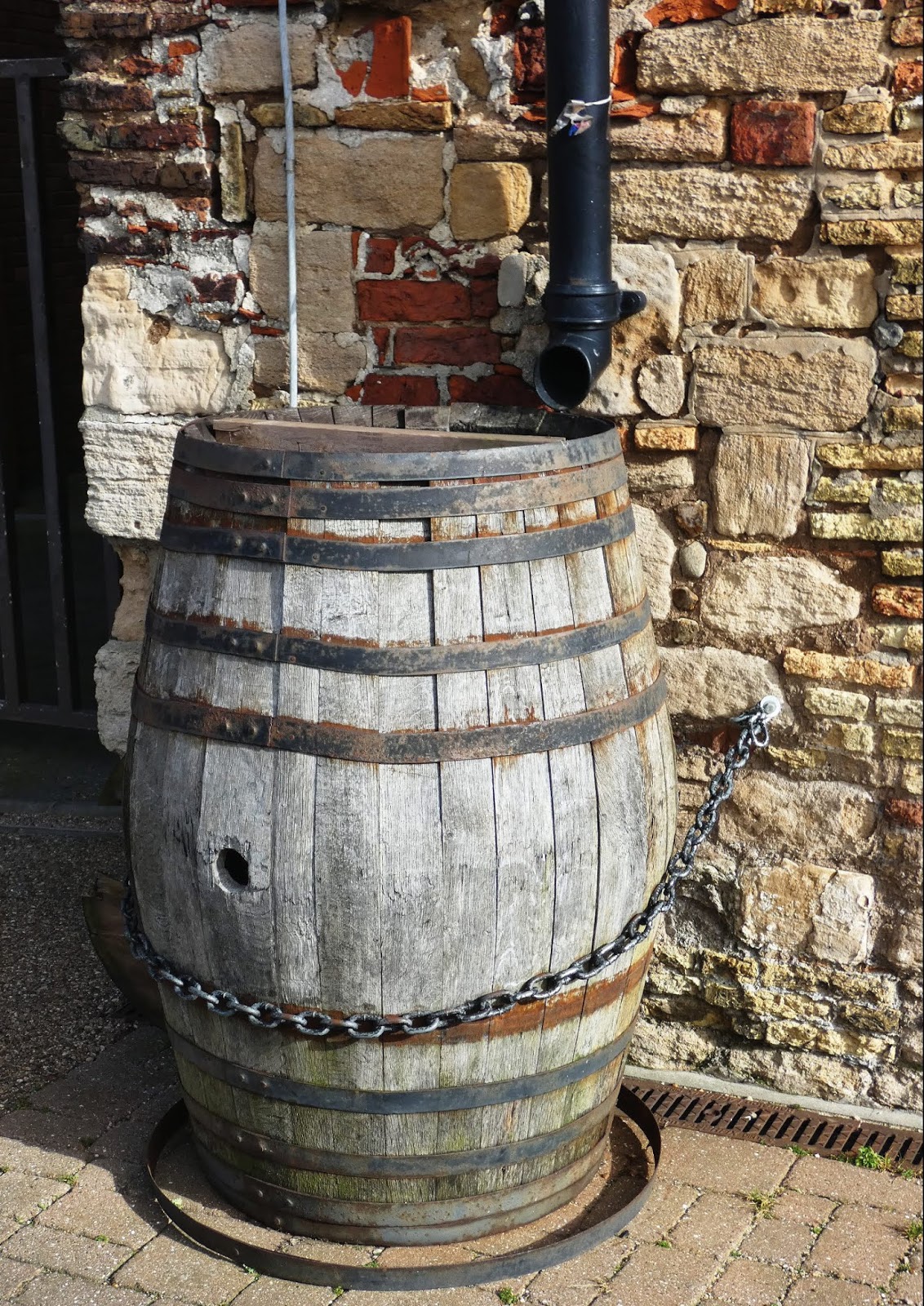
I'd like to see this "rain barrel" in a downpour ...

Wednesday, 11 March 2020

Up before the Beak


This fine weather vane is, I've since found, on the magistrates court's rear, riverside end. Clearly, despite looking like a common cormorant or shag, it's an attempt at the that old, medieval pelican in its piety motif that runs through King's Lynn.

Doing the minimal amount of due diligence that I always do for this work I find that the ancient slang term "Beak" meaning a magistrate has an uncertain etymology (maybe Dutch, maybe Saxon beag a gold collar, maybe this, maybe that ...) and is, in fact somewhat dated and out of fashion, being used only by old folk (like me) and limited to the London area. It seems "Stipe" as in stipendiary magistrate is very much the mot juste among the classes that need a word for a magistrate. Well, all I can say is that I've never heard anyone say "Stipe" in my 63 years but then I've led such a sheltered life.

Tuesday, 10 March 2020

Self-isolation

No doubt in a few days time we'll all be keeping our distance from each other, eyeing those with minor colds and sniffles with the deepest suspicion, blaming innocents for all our woes as the civilised world (or at least the shops) grind to a virus addled halt all for our own good don't you know ... These measures (whatever they turn out to be) make the Government look like it is, at least, doing something and the last thing a Government wants to be doing is looking on helpless (as it is) and unable to prevent a catastrophe (which it is) ...

But catastrophe? Nah! Not going to happen, we'll muddle on, as we always do. I'm a great believer in the benefits of muddling on; complaining and moaning, but buggering on regardless. It'll all pass, these things do, the next story will come along to worry the worrymongers, and what doesn't kill you only makes you bronchitic (and possibly cyanotic) but life goes on or not as the case may be; and if not then it doesn't matter and you can tell them I've had a wonderful life ...

Now you'll maybe want to wash your hands after reading this ... and keep your distance, go on, back off!

Monday, 9 March 2020

Guannock Gate, The Walks, King's Lynn


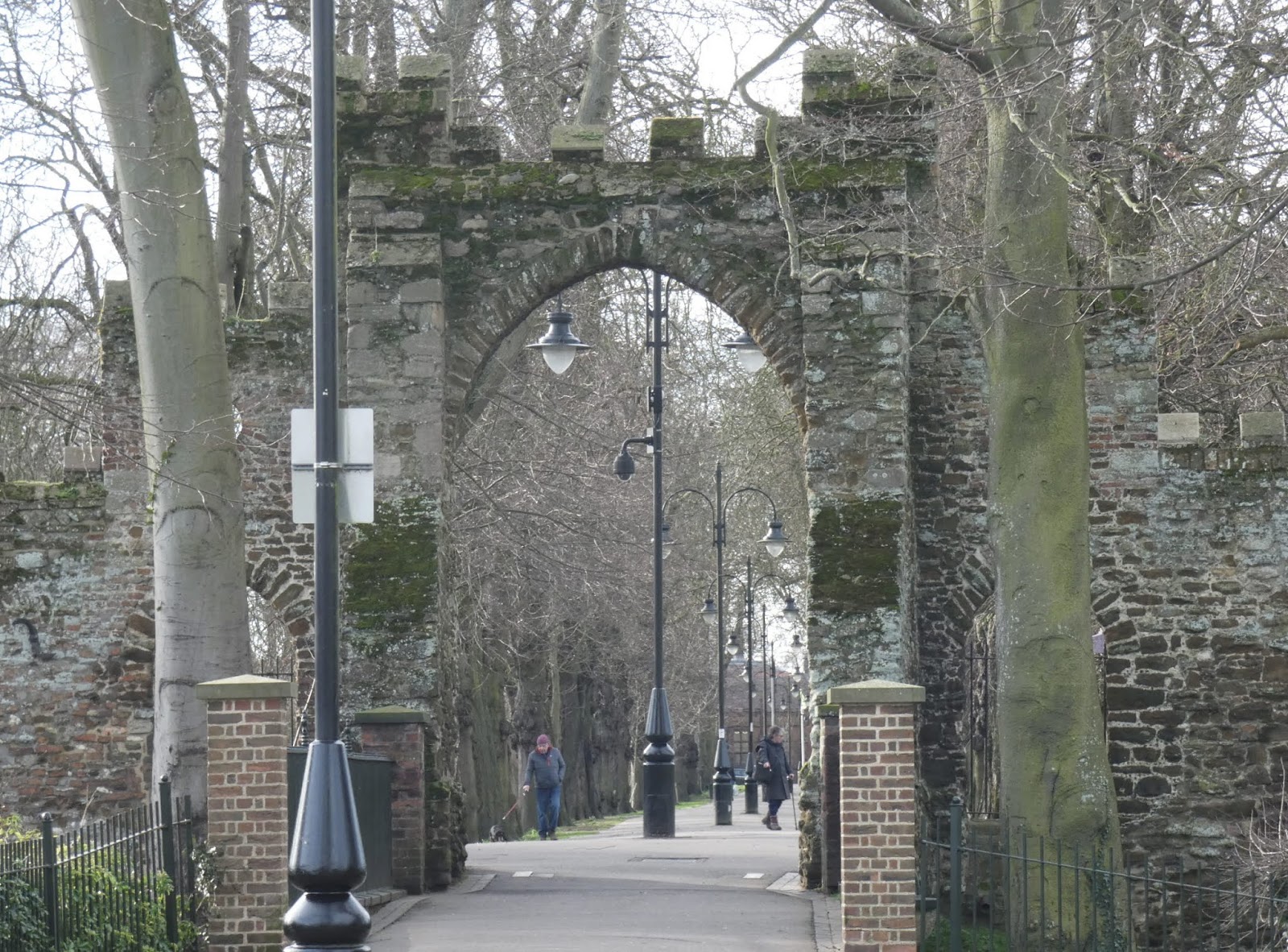
If you spin around from where yesterday's post was taken you'll come across this handsome arch cum folly cum historical reconstruction that I showed before at night.


I'll post again a link to more about this here.

Sunday, 8 March 2020

Bandstand, The Walks, King's Lynn


Wouldn't you know it, you post one bandstand and along comes another; this one in the Walks. This is on what looks like an island surrounded by the much abused Gaywood River, a special place given a special name: Vancouver Garden after George Vancouver who, well why not let the plaque do the talking ...


From what I gather this place in the Walks is the site of an open air swimming pool now long gone.

Saturday, 7 March 2020

Nelson Street and Devil's Alley, King's Lynn


I guess all towns have their stories to keep the visitor wondering if his hosts are quite as sane as they appear. So it should not come as a surprise to hear that the Devil himself once came ashore here, at the back of Nelson Street, to collect souls or whatever a devil collects (maybe toilet paper and hand sanitizer, who knows?). Anyhow being as well known as he was (he face was in  every church and chapel, in those days) he was spotted by a priest and told to get himself gone and given a shower of holy water for his pains. Such an unfriendly reception displeased the old devil and he stamped his cloven foot leaving a mark which you can see to this day ... or so it is said.
Devil's Alley, which leads down to the river, is where all this happened and the tale must be true as a familiar of the devil still haunts old Nelson Street to this day.


Friday, 6 March 2020

Bandstand, Hunstanton

I've said it before that no place with any sort of get up and go can afford to be without a bandstand. So what if it sits (or is that stands?) there empty for 99.9% of its miserable existence; it is a testament to where a town wants to be ... a bandstanded kind of place. And so what if when it is actually being used for it is intended (and not as trysting place for malfeasance)  no-one stops to listen; they just think a band playing on the prom by the seaside on that one warm day in July (Tiddely-om-pom-pom!) is just so right and fitting that they float on by in a nostalgic revery.

The weekend in black and white is here.

Thursday, 5 March 2020

Groyne Strain


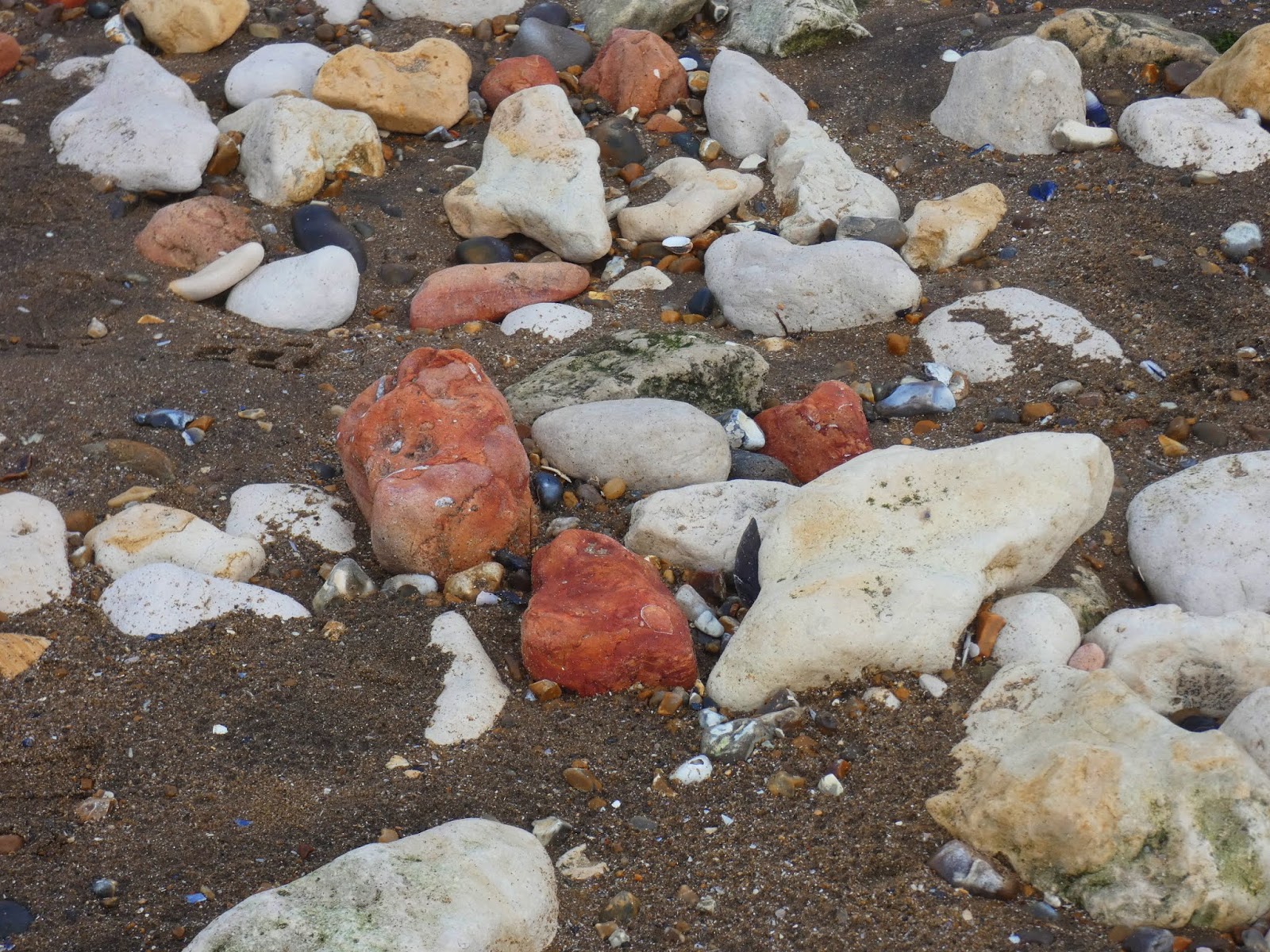
Now there can few pleasures as great as a stroll on a beach on a chilly, cloudy day in late February, especially when the wind is blowing at a steady 30 mph and gusting fit to lift you off the ground and dump you in another county. Such delights are best taken in short measures and so I didn't overindulge my stay on Hunstanton's famous beach. It's a funny old beach for a seaside resort; you might imagine miles of golden sand but this is split into short stretches by numerous groynes and the sand is well peppered by vast numbers of large pebbles in various sized and colours, red, white and creamy, having come from the cliff whereon sits the lighthouse. (I didn't have the opportunity to see the cliff from the beach but I saw it many, many years ago and can confirm that it is indeed two toned; red and white). Generations of youngsters and oldsters have enjoyed the beach over the years so it can't be all that bad.


Don't ask what the poles with odd attachments at the end of each groyne are for because I haven't a clue.


Wednesday, 4 March 2020

Alios delectare iuvat

Something I noticed during our short stay in Norfolk are the delightful, decorative signs that adorn villages and towns in these parts, usually depicting a motto and a scene from the history of the place or some local landmark. Hunstanton's features the famous sun setting over the sea, that I (and everybody else) mentioned, and old Edmund and his wolf. The motto, as you no doubt know, means "It is our pleasure to please others". Sunny Hunny certainly pleases.

You can see a collection of these signs here.

This, for comparison , is what we have across the road for Cottingham. A bit small and dull.

Tuesday, 3 March 2020

The Lighthouse


A sign on the gate says there's been a lighthouse here on the cliff top over Old Hunstanton since 1665 though some suggest that a hermit, one Thomas Cooke, was paid by the local bigwigs, the L'Estranges (We met a L'Estrange a few days ago), back in 1530's to keep a light from the chapel that I posted yesterday; lighthouses being more helpful than churches as someone once said.


Trinity House took over the running of all UK lighthouses in 1836 and this building went up in 1840. This is the Trinity House coat of arms.

It's always nice to have some claim to fame even if this is disputed ...

The lighthouse as you can see is no longer functioning and is in fact a holiday cottage. You'll want to a look around inside, no doubt; well you're in luck as there's a video that I'll post just for completeness and the catchy (mindless) tune.

Monday, 2 March 2020

A shaggy dog story


To cut a long and very unlikely story short: a king, Edmund by name, king of the east Angles was captured by, or surrendered to, the Danes (or Vikings if you must be crude) who then used him as target practice for their archers (think St Sebastian only worse) then chopped off his head (as was the style in those days and those days were the mid 850s, crazy times ...) and threw it away after playing a game of football with it, of course. Edmund's lot found the body but not the head. Later they heard a wolf calling to them; wolfy had the head between his paws ... hence this howling wolf on Hunstanton cliff top. Why Hunstanton? because Edmond, as young boy, is supposed to have landed here or was shipwrecked here or ... any way Edmund woz here OK! And he built this chapel that is now a repaired ruin ... or at the very least this chapel was named after him, St Edmund's-on-the-cliff. Anyway this Edmund is known as King Edmund the Martyr and is interred in Bury St Edmunds though Bury there means burgh not inter ... and not at all to be confused with King Edmund the First who never met a Dane he didn't like.

Howl, howl, howl, howl!


Some shaggy dogs came to pose.


The neatly repaired chapel doorway has provided a frame for generations of photographers; folk were queuing up behind me to take their snaps. I'll post the lighthouse tomorrow.


I got this off the net I think it dates to 1895 but don't quote me on that.

Sunday, 1 March 2020

Henry L'Estrange Styleman Le Strange


We took ourselves out on a trip to the coast on a road we had not traveled on for thirty five years. The road had been straightened and did not pass through Onion Corner or down Cat's Bottom; places which put the fear of an early demise on the unwary driver. Still the road passes rich sounding places such as Snettisham, Heacham, Wolferton and (my favourite) Ingoldisthorpe; we could have dropped in on Queenie at Sandringham but thought better. Our destination for the afternoon was the delightful seaside resort of Hunstanton; yes, we were going to sunny Hunny. I'll say it now because everyone always says this about Hunstanton: it is the only resort on the east coast where you can watch the sun go down over the sea; there that's that out of the way and we can move on. Hunstanton is on the Wash, that bit of the coast where the North Sea has taken a fifteen mile wide bite out of the land, you can see Lincolnshire on the horizon should you want.


Hunstanton had been a small fishing village until our hero, Henry L'Estrange Styleman Le Strange (we'll call him Henry shall we?), Henry had the idea of building a seaside town, New Hunstanton, connected to the world by a railway to King's Lynn. It was an immense success, the railway being the most profitable in the country. Henry fancied himself as an artist and drew up designs for lots of buildings including the Town Hall which you see above. There's a hotel next door which I somehow did not photograph in similar honey coloured stone so you'll have to take my word for how nice it looks.
The statue in front of the town hall was unveiled in 2017, cost a mere £40,000 and is, no doubt, the pride of the town, there's more here (I'm not that bothered).
There's more to Hunstanton than just this man and his town hall but as today's theme for the first of the month is "municipal buildings" this will do for now. 

Thanks are owed to Olly and her friend, Smut (or Ann), for transport and pleasant company on this trip.

Saturday, 29 February 2020

Customs House, King's Lynn


Sometimes I think places try too hard to get the people in; take this light show on the Customs House for example. Is it really necessary? Does it add anything to the place? I'm not convinced. Oh it's an entertaining five minutes or so and, yes, I took far too many pictures but I feel it somehow trivializes the architecture. Simple lighting would satisfy me. There's four of these shows on in the town apparently but when we were there this was the only one actually working. Does a 900 hundred year church like St Margaret's need decorating by projected illuminations to please tourists? Maybe it does these days I don't know.


Weekend Reflections are here.

Friday, 28 February 2020

Yellow


The Great Ouse looking south towards the magnificent sugar beet factory paper mill.

Thursday, 27 February 2020

Bank House, King's Lynn

Here's a thing you don't see that often: a statue of King Charles I, he who picked a quarrel with Parliament and lost not just the quarrel but his head as well . Here he stands on top of Bank House on King's Staithe Square (a nasty symbol of royalist oppression and tyranny). The building was once a bank (hence the name, clever eh?) and is now a restaurant. Charles is dressed in armour and looking a bit of a pillock. Couple this with the statue of Charles fils (proud symbol of the blessed restoration) on the nearby Customs House with his louche gowns and a wig that could house a small family and King's Lynn has a right pair of proper Charleys to be proud of.

The building dates from early 1780's and was the home of Gurney's Bank which went on by stages to become Barclay's Bank which you might have heard of. I'm guessing it's a listed building of some sort but sloth prevent me checking...

Wednesday, 26 February 2020

St Nicholas Chapel, King's Lynn

While in Lynn this was the view that greeted me each day on my way to get the newspapers in Norfolk Street. Bit different from the usual streetscene.

The weekend in black and white is here.